Disclosure: Shoe Clarity is reader-supported. As an Amazon Associate, we earn from qualifying purchases. We may also earn commissions from other affiliate programs, at no additional cost to you. Learn more →
How long do work shoes last? There is no universal expiration date. For heavily used restaurant slip-resistant shoes, some manufacturers and workplace programs recommend replacement at six months. Other work shoes may last longer or wear out sooner, depending on use and conditions. More important than the calendar, though, are worn outsole tread, damaged construction, poor fit, and changes in how the shoes perform.
A line cook walking across greasy tile puts different demands on footwear than a cashier standing on a dry retail floor. Even two workers wearing the same model may wear through their shoes at different rates. This guide explains what affects work-shoe lifespan, the warning signs to check, and how to decide whether cleaning, an approved repair, or replacement makes sense.
How Long Should Work Shoes Last With Daily Use?
For heavily used slip-resistant footwear, six months is a replacement interval recommended by some manufacturers and workplace programs, not a universal expiration date. Shoes For Crews recommends replacing its slip-resistant footwear every six months for effective traction. The UC Davis Health footwear program’s six-month reordering policy gives another example of an organization setting a replacement interval. Those are manufacturer and program policies, not a federal deadline for every type of work shoe.
Research offers a reason to take wear seriously. A study following 475 workers at 36 US limited-service restaurants found that slip-resistant shoes used for less than six months were moderately more effective than older pairs. Among participants already using slip-resistant shoes, changing to a new pair was associated with fewer self-reported slips. The researchers also said more work was needed to develop reliable replacement criteria. That study does not establish a precise lifespan for every brand, floor, or worker.
A practical way to judge the timing is to consider the work itself:
- Daily kitchen or dish-area shifts: Inspect the soles frequently and follow any workplace schedule. Replace sooner when tread or construction deteriorates.
- Retail, hospitality, or general service: Judge wear by hours, surfaces, cushioning, stability, and the shoe’s intended use.
- Occasional work use: A pair may remain serviceable longer, but age alone does not establish safety.
- Protective-toe or other safety footwear: Follow employer requirements and the manufacturer’s instructions. Damage to a required protective feature needs prompt attention, regardless of age.
Quick decision: Keep inspecting shoes with intact tread and sound construction. Clean first if debris blocks otherwise intact grooves. Replace promptly when tread is worn smooth, parts separate, or a required safety feature is damaged. A clean-looking upper can hide a badly worn outsole.
What Affects How Long Work Shoes Last?
Hours Worked and Frequency of Use
Eight hours in a busy kitchen means many steps, quick turns, and repeated contact with the floor. Five shifts a week also put more wear on one pair than occasional weekend use. Counting months alone misses that difference. If you rotate between two job-appropriate pairs, each one may see fewer hours, although rotation does not guarantee a longer safe lifespan.
Floor Surfaces and Working Conditions
Rough concrete can abrade outsoles. Wet tile, grease, food residue, and cleaning products introduce different traction demands. A restaurant worker may move from a relatively dry dining area to a wet dish station dozens of times in a shift. Even a shoe that looks nearly new can accumulate debris in its grooves, making cleaning and inspection part of the routine.
The UK’s Health and Safety Executive explains that outsole compounds, tread patterns, and workplace contaminants all affect footwear traction. It also recommends checking and replacing footwear before wear makes it unsafe. This is a useful principle for US workers, even though UK test classifications are not US workplace requirements.
Shoe Construction and Materials
The outsole, midsole, upper, heel structure, and any protective components age differently. An outsole may lose its defined tread while the upper still looks fine. A foam midsole can compress, or the upper can tear near a flex point. Leather, mesh, molded clogs, and rubber-soled sneakers do not have identical wear patterns, so inspect the actual shoe instead of relying on a generic lifespan chart.
6 Signs Your Work Shoes Need Replacing
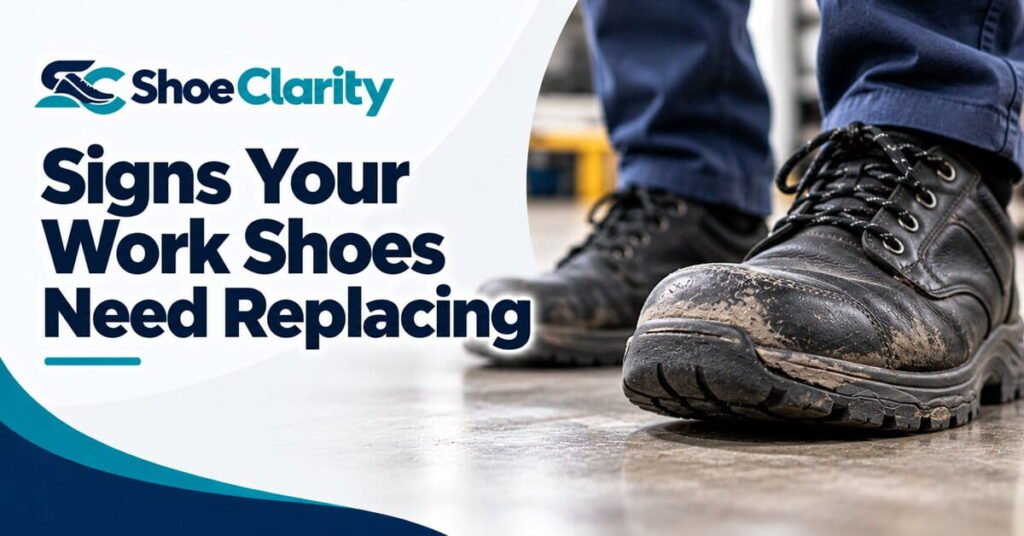
Knowing when to replace work shoes starts with visible wear, not guesswork about their age. Look for these six changes, especially if your job involves wet floors, frequent turns, or long hours on your feet.
1. The Outsole Tread Is Worn or Flattened
Turn your shoes over. Look for smooth areas where grooves used to be, especially around the heel and the ball of the foot. Check whether one side has worn more than the other, whether the tread pattern has become shallow, and whether the outsole is starting to wear through.
For restaurant footwear, the tread is more than a cosmetic detail. Its pattern helps manage liquid under the sole. A shoe with a worn heel can look respectable from above and still warrant replacement. Do not wait until the entire bottom is smooth.
2. Grip Feels Less Reliable After Proper Cleaning
Grease or food packed into otherwise intact tread may be removable. Permanent wear is different. If you notice repeated unexpected slipping during ordinary work, report the hazard, check the floor conditions, and inspect the shoes promptly. Do not deliberately walk across a wet or oily patch to test their grip.
Also remember that no shoe is slip-proof. The OSHA guidance for restaurant cleanup emphasizes appropriate footwear alongside prompt spill removal, maintained walking surfaces, and other controls. Footwear is one part of the safety system, not a replacement for it.
3. The Cushioning Feels Flat or Compressed
A midsole can lose some of its original feel after repeated loading. Look for visibly compressed or lopsided foam, deep creases, and a change in how the shoe responds underfoot. The left and right shoes may even feel different.
New discomfort after a normal shift can be a reason to investigate, but it does not prove that the cushioning caused the problem. Check fit, activity changes, and the shoe’s condition together. If pain, numbness, or swelling persists, a qualified healthcare professional can help evaluate it.
4. The Heel or Sole Wears Unevenly
Set both shoes on a flat, dry surface and view them from behind. Does one heel look noticeably lower, or does a shoe lean to one side? Uneven wear can change how stable a pair feels, especially when you turn or carry loads.
Minor differences between shoes are common. A pronounced lean, damaged heel structure, or rapid new wear deserves attention. Don’t assume a thicker insole will fix a distorted outsole.
5. The Upper or Sole Is Damaged
Inspect the upper for tears, split stitching, cracked material, and openings near the sole. Look for sole separation, exposed foam, or parts that catch on the floor. In wet work areas, damage that lets liquid enter can also make footwear less suitable for the task.
If your job requires a protective toe or other rated feature, follow the manufacturer and employer instructions after impact or visible damage. A home glue repair cannot be assumed to restore the shoe’s original protective performance or workplace compliance.
6. Your Shoes No Longer Fit or Feel Secure
Noticeable heel slipping, unexpected foot movement, new rubbing, or pressure across the forefoot can turn a routine shift into a distraction. Loose laces are easy to correct; a stretched-out upper or distorted heel may not be. A removable insole can also wear before the rest of the shoe does.
Compare the current pair with the basic checks for heel security, toe space, and comfortable width. If a shoe cannot hold your foot reliably after ordinary adjustments, replacement may be more sensible than trying to force a better fit.
How to Check If Your Work Shoes Are Worn Out
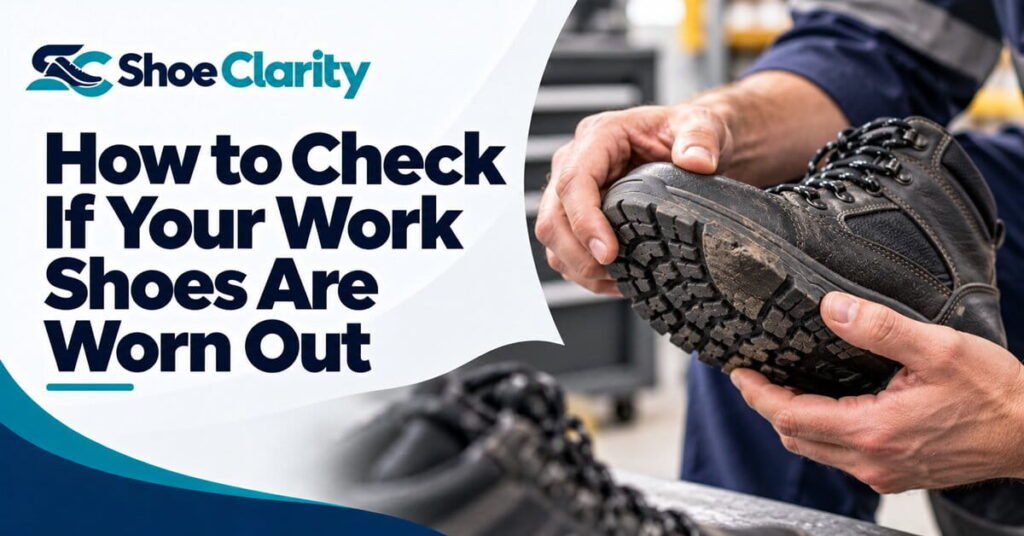
You can inspect a pair in about five minutes at home or before a shift. Use good lighting and work on a clean, dry surface. Start by removing loose debris so you can see the rubber rather than the grease stuck to it.
- Check the heel and forefoot tread. Look for flattened patches, worn grooves, or areas worn through to another material.
- Compare both shoes. Examine the right and left heels from behind. Check whether either sole leans, separates, or wears unevenly.
- Look at the midsole and upper. Deep compression, cracked components, torn seams, and a loose heel counter deserve attention.
- Check ordinary fit on a dry floor. Wear your work socks, lace or fasten the shoes normally, and note any rubbing or excessive internal movement. This is a fit check, not a traction challenge.
- Review job requirements. Follow your employer’s footwear policy and model-specific care and replacement instructions.
For food-service slip-resistant soles, a NIOSH-supported visual method offers another useful clue. The CDC/NIOSH tread-wear inspection poster describes placing the circular base of an AA battery at the edge of the worn heel-tread area. If that worn patch fully surrounds the battery base, the poster advises replacement. It recommends checking once or twice a month and moving to weekly checks as shoes wear down.
That’s a visual screening method for the type of slip-resistant footwear studied, not a universal test for boots, clogs, or every outsole design. A passing battery check does not prove that a shoe is safe in every workplace. Visible structural damage or an employer’s earlier replacement requirement takes priority.
The surprising part? A localized smooth heel patch can matter more than how new the rest of the outsole looks. Overall appearance is not a reliable traction check.
Can You Make Work Shoes Last Longer?
Good care can help prevent avoidable damage and keep intact tread free of debris. It cannot reverse rubber wear or restore a failed protective component.
- Clean outsoles regularly. Remove food, grease, and trapped particles with a method approved for the shoe. Pay particular attention to tread grooves.
- Dry shoes properly. Follow the manufacturer’s instructions rather than putting footwear against high heat. Some materials and adhesives may be damaged by aggressive drying.
- Reserve work shoes for work. Extra errands mean extra sole wear. Keeping a pair for shifts makes its condition easier to track.
- Consider rotation when practical. Alternating suitable pairs may reduce daily use per pair. Inspect both; rotation is not a reason to extend them past safe condition.
- Recheck them after messy shifts. Heavy grease buildup or a damaged upper is easier to address before the next busy shift.
Routine cleaning matters particularly in food service. But don’t confuse clean grooves with new rubber. Once the outsole’s tread has physically worn away, brushing will not bring it back.
Should You Repair or Replace Worn Work Shoes?
The answer depends on what failed. Some maintenance restores cleanliness or comfort; other problems affect the footwear’s structure or job suitability.
- Intact tread clogged with debris: Clean according to manufacturer instructions, then inspect the exposed tread again.
- A removable insole is worn: Check whether an appropriate replacement footbed is allowed and leaves enough room for a secure fit.
- Deeply worn tread or sole separation: Replace the shoes, unless the manufacturer offers an approved repair process suitable for the intended job.
- Damaged protective toe or other safety component: Stop relying on the affected protection and follow workplace and manufacturer procedures for assessment or replacement.
- New discomfort without visible damage: Check the fit and wear pattern. Persistent symptoms need attention beyond simply buying a different size.
If you are comparing replacement options, first understand how outsole design and floor conditions influence traction. A fresh, attractive shoe is not automatically appropriate for a greasy kitchen or another demanding work environment.

Frequently Asked Questions
How Often Should You Replace Work Shoes?
There is no fixed schedule for every job. Some slip-resistant footwear programs use six months, but actual wear depends on hours, floor conditions, and construction. Inspect the tread and structure regularly. Follow your employer and manufacturer requirements, and replace damaged footwear even when it is relatively new.
Can Work Shoes Last Longer Than a Year?
Yes, some lightly used work shoes may remain serviceable for more than a year. That does not mean every pair worn daily through long shifts should. Calendar age is only one clue. Check tread depth, shoe stability, cushioning condition, fit, and the demands of your workplace before deciding to keep wearing them.
How Long Do Slip-Resistant Restaurant Shoes Last?
Six months is a replacement checkpoint in some slip-resistant footwear programs, not a universal limit. Rough or greasy work environments can change how fast shoes wear. Monitor heel-tread condition and follow workplace and manufacturer requirements rather than relying on the purchase date alone.
Do Worn Insoles Mean You Need New Work Shoes?
Not necessarily. If the original insole is removable and the rest of the shoe remains sound, an approved replacement may help with fit or comfort. But an insole does not restore flattened outsole tread, a damaged midsole, or structural support. Confirm that any replacement does not interfere with required safety features or crowd your feet.
Can You Wear Work Shoes With Worn Tread?
Significantly worn tread is a reason to replace footwear used where traction matters. Smooth patches can affect how the outsole handles liquids, especially around the heel. Do not test questionable shoes by walking on a slippery floor. Instead, inspect the tread, follow employer policy, and choose footwear appropriate to the surfaces and hazards you actually encounter.
The Bottom Line: Replace Work Shoes Before They Become a Problem
How long work shoes last depends on both usage and condition. Check outsole tread first, then cushioning, heel wear, construction, and fit. A six-month checkpoint helps in some slip-resistant footwear programs, but smooth tread, structural damage, or failed protective features require attention sooner.
Don’t wait for a near-fall to inspect your shoes. If the tread is worn or the structure is damaged, act before your next demanding shift. When choosing a replacement, compare work-shoe options for different restaurant duties, then check the model’s current specifications, sizing guidance, and your employer’s footwear requirements.