Disclosure: Shoe Clarity is reader-supported. As an Amazon Associate, we earn from qualifying purchases. We may also earn commissions from other affiliate programs, at no additional cost to you. Learn more →
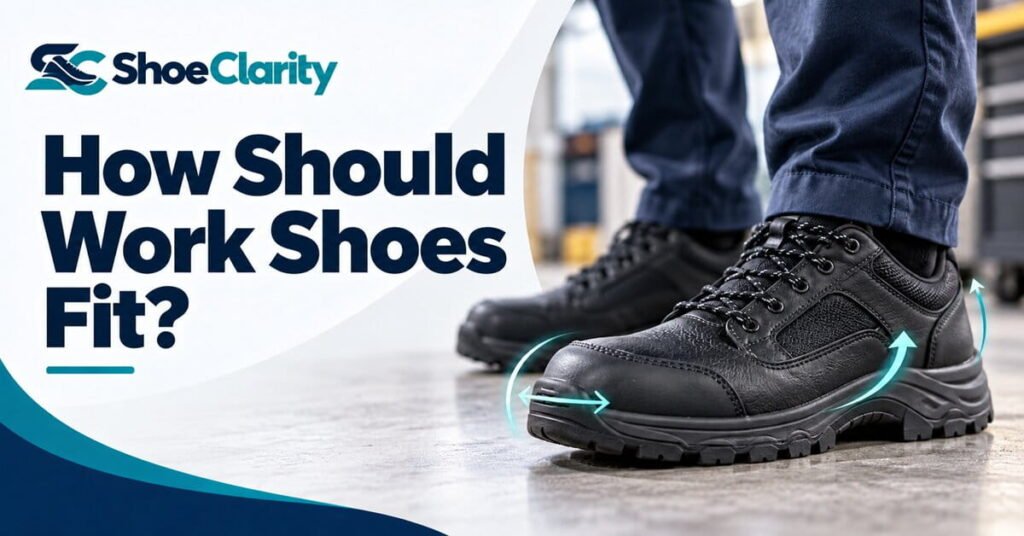
How should work shoes fit? They should hold your heel and midfoot securely without squeezing your toes or forefoot. Leave space beyond your longest toe, check that the shoe’s widest point matches your foot, and make sure your foot doesn’t slide forward when you walk. Snug is good. Pinching, numbness, or constant heel slipping isn’t.
That distinction matters during restaurant shifts, warehouse rounds, or hours at a register. A pair that feels fine while you’re sitting can become uncomfortable after repeated turns on hard floors. Before buying, test how the shoes fit while standing and moving, not just how the size looks on the label.
How Should Work Shoes Fit? The Quick Answer
A good work shoe feels comfortable the moment you try it on. It should allow natural toe movement while keeping your foot steady during walking, stopping, and changing direction. Extra cushioning cannot make up for a poor fit.
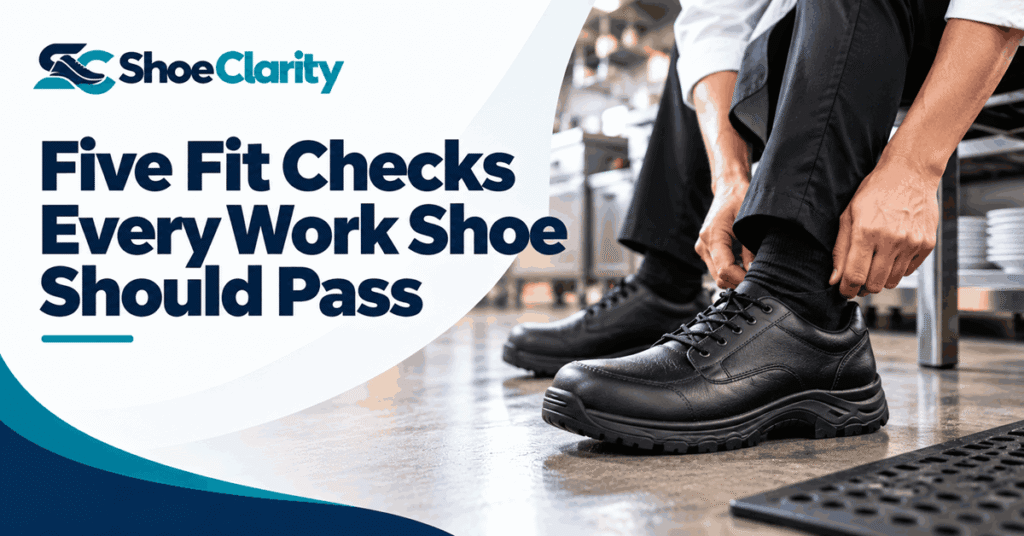
Use these five checks as a starting point:
- Toes: Your longest toe should not touch the front. A common fitting reference is roughly 3/8 to 1/2 inch of clearance while standing.
- Width: The ball of your foot should align with the widest part of the shoe, without side pressure.
- Heel: Your heel should feel held in place, not repeatedly lifting or rubbing.
- Midfoot: The shoe should feel secure across the middle of your foot without squeezing the instep.
- Depth: Your toes, work socks, and any approved inserts should fit without crowding the upper.
These are fitting guidelines, not a rule that every shoe or foot must match an identical measurement. The foot-and-ankle specialists’ fitting checklist also emphasizes shoe shape, width, and walking comfort rather than relying on the size printed on the label.
The short answer: snug means controlled movement. Tight means pressure. Choose the first, and check all five areas before deciding a shoe fits.
Five Fit Checks Every Work Shoe Should Pass
1. Toe Room: How Much Space Is Enough?
Stand with your weight on both feet and check the space beyond your longest toe. About 3/8 to 1/2 inch is a widely used fitting reference, but shape matters too. Your toes need enough width and height to move without hitting the upper.
Check while standing, not sitting. Feet spread under body weight, and your second toe may be longer than your big toe. Try a few steps and a gentle stop. Your toes shouldn’t strike the shoe’s front.
More room isn’t always better. A shoe can pass the toe-clearance test but still be too long if your foot slides forward inside it. That’s where heel and midfoot fit come in.
2. Width: Avoid Pressure Across the Forefoot
Length and width solve different problems. When your toes have enough forward space but the sides of your foot feel squeezed, a longer size may create a sloppy heel. Try a different width or toe-box shape first.
Look for a shape that follows your foot, especially across the ball of the foot. The upper should rest against your foot without pushing it over the edge of the sole. Matching the shoe width to your forefoot matters just as much as length, especially when you spend hours standing. A wide or extra-wide option may help if the manufacturer offers it, but width labels vary by brand.
Consider a worker who usually wears a men’s size 10. A size 10 wide may fit better than a standard-width 10.5 when the forefoot feels cramped. The longer pair could increase heel movement, especially during fast turns.
3. Heel Fit: Secure Without Rubbing
Your heel should stay reasonably stable during ordinary walking. A lace-up shoe that lifts noticeably with each step, scrapes your heel, or makes you grip with your toes needs a closer look.
Adjust the laces and walk again. Persistent heel lift can point to the wrong heel shape, internal volume, or size. Don’t go shorter just to stop slipping if that makes your toes hit the front.
Some clogs are designed to allow more heel movement than lace-up sneakers. That is a design difference, not a reason to accept a shoe that feels unstable. Follow the manufacturer’s fit instructions for the specific style.
4. Midfoot Fit: Snug, Not Tight
The midfoot is where a shoe can keep your foot from sliding forward. You should feel controlled contact around the arch and instep without sharp pressure from the laces or upper.
Try turning slowly and taking a few brisk steps. Does your foot stay centered? Or does it shift inside the shoe each time you change direction?
A less obvious problem: the toes can have plenty of space while a shallow upper squeezes the instep. That isn’t necessarily a length problem. Check how much room you have over the top of your foot before choosing a larger size.
5. Shoe Depth: Leave Space for Socks and Insoles
Correct length and width don’t guarantee enough depth. If the upper presses on your toes or instep, thicker socks or an orthotic may make it worse. Depth is the space above your foot, not just the distance from heel to toe.
Try shoes with the exact socks and inserts you intend to use. If you’re replacing a removable factory footbed, follow the footwear manufacturer’s guidance and make sure the replacement doesn’t crowd your toes or compromise required protective features. Adding an insert on top of an existing footbed can make an otherwise good fit too tight.
How to Check Work Shoe Size Before Your Shift
A short fit test reveals more than a size label. These work shoe sizing tips apply whether you’re trying on restaurant sneakers, clogs, or other job-appropriate footwear.
- Measure both feet while standing. Feet aren’t always the same size. Start with the larger foot, then check how the smaller one fits.
- Try shoes later in the day. Feet can become fuller after hours of standing and walking, so an afternoon or evening fitting often provides a better reference.
- Wear your usual work socks. Bring the socks and orthotics you actually use. Thin fitting-room socks can disguise a tight shoe.
- Check length, width, and depth separately. Stand upright, feel for toe clearance, and check for squeezing across the forefoot or instep.
- Walk, turn, and stop. On a clean, safe surface, take several steps, change direction, and pause. Watch for heel lift or your toes hitting the front.
- Recheck both feet. Keep the shoes on for several minutes if possible. A pressure point that develops while you walk matters more than how comfortable the pair felt for the first few seconds.
Work-shoe fitting recommendations from Shoes For Crews similarly advise measuring both feet, trying shoes later in the day, wearing your normal socks or inserts, and allowing room beyond the longest toe. A brand’s size chart is a starting point, not proof that a shoe fits your particular foot.
Buying online? Use the specific model’s sizing chart and any width notes rather than assuming all US size 9 shoes fit alike. Measure while standing, check the return window, and test new shoes indoors on a clean, dry surface before wearing them to work.
How Fit Changes Across Different Work Shoe Styles
A secure fit looks slightly different in sneakers, clogs, and protective footwear. Test the style you actually plan to wear.
Lace-Up Work Sneakers
Laces help fine-tune instep pressure and heel hold during walking or quick turns. They can’t rescue a shoe that’s substantially too long or too wide. If you must pull the laces unusually tight to stop sliding, compare another width or model.
Work Clogs and Slip-On Shoes
Slip-ons offer fewer adjustment points. Pay attention to footbed length, instep shape, and heel design. A backless clog can allow some intentional heel motion; a strap-backed clog has different fitting instructions. In either case, you shouldn’t have to curl your toes to keep the footwear on.
For restaurant roles, don’t treat a comfortable fit as proof of suitable traction. If your workplace has wet or greasy floors, review how shoe soles interact with slippery surfaces and check your employer’s footwear rules. OSHA’s restaurant floor-safety recommendations also address appropriate slip-resistant footwear alongside housekeeping measures such as cleaning spills.
Protective-Toe Work Shoes
A protective toe cap must leave room for your toes without pressing on them. Unlike a soft upper, the protective cap isn’t something to expect to stretch. Match the shoe’s fit and its required protection to the job.
In the United States, OSHA’s foot-protection requirements apply when covered workplace hazards call for protective footwear. Fit matters, but it does not replace the required protection rating or your employer’s hazard assessment.
Signs Your Work Shoes Are Too Tight or Too Loose
Poor fit usually announces itself early. Watch for these signs while standing, walking, and making a few controlled turns, before a long shift makes the problem harder to ignore.
- Toes hit the front while walking: Length and foot movement inside the shoe
- Sides of the forefoot feel squeezed: Width and toe-box shape
- Pressure on the tops of the toes: Toe-box depth or insert thickness
- Heel lifts repeatedly: Heel shape, lacing, or overall shoe volume
- Foot slides forward on turns: Midfoot hold and closure adjustment
- Rubbing starts in one consistent spot: Local pressure, seams, or shape mismatch
For example, a server might have plenty of toe clearance but get heel rubbing every time they pivot between tables. Buying a longer shoe is unlikely to help. A better-fitting heel or different model is the more useful place to start.
The workplace footwear guidance from CCOHS connects poorly fitting shoes and long periods of standing with discomfort and foot problems. These symptoms suggest a fit issue worth investigating, but they aren’t a diagnosis. Persistent pain, numbness, or skin changes deserve professional evaluation.
Should You Size Up for Long Work Shifts?
Not as a rule. Feet may become fuller during the day, but automatically buying a half-size larger can cause heel movement and forward sliding. Fit the shoe to your foot at the time you’ll typically wear it, not to a universal sizing-up trick.
If your toes touch the front, compare the next length. If length is fine but the sides pinch, test a wider model. Pressure across the top can mean inadequate depth. Those are three different problems, and the same size change won’t solve them all.
Try shoes later in the day with your usual socks, and compare sizes and widths side by side. Pay attention to how the foot stays centered during movement. For long shifts, stable fit beats a loose shoe chosen only for extra room.
Can Socks, Insoles, or Lacing Improve the Fit?
Sometimes, but start with the correct shoe size and shape. Small adjustments can refine a good fit; they cannot turn the wrong shoe into the right one.
Adjustable laces may help a slightly loose heel. Smooth, properly sized work socks limit bunching. An insole changes how your foot sits inside the shoe and may reduce available space, especially if placed on top of the existing footbed.
Here’s a common trade-off: an added insert stops your heel slipping, but suddenly your toes rub the upper. You’ve traded one fit problem for another.
Follow the maker’s instructions before replacing insoles in protective footwear, since changes may affect its intended protection. If length, width, or heel shape still feels wrong, an exchange makes more sense than stacking fixes.
When Should You Exchange Your Work Shoes?
Return or exchange a new pair when normal walking causes toe contact, steady pinching, repeated heel slipping, or rubbing that ordinary closure adjustment won’t fix. Comfortable work footwear should not require a painful break-in period.
Also inspect whether the shoe meets your job’s actual requirements. The right fit does not make a casual sneaker suitable for every restaurant floor or a nonprotective shoe appropriate where protective footwear is required. For that broader decision, compare footwear features against your daily restaurant tasks before choosing a replacement.
If discomfort persists in properly fitting shoes, or you notice numbness, significant pain, or recurring skin changes, seek advice from a qualified healthcare professional. Fit checks help you choose footwear; they do not diagnose foot conditions.

Frequently Asked Questions
Should work shoes fit tight or loose?
Neither. Work shoes should be snug through the midfoot and heel without squeezing your toes. The forefoot needs enough width and depth to move naturally. A shoe that pinches or repeatedly slips doesn’t pass the fit test.
How much toe room should work shoes have?
A common reference is about 3/8 to 1/2 inch past your longest toe while standing. The shoe still needs a suitable width and toe-box depth. Check by walking in it, not by measuring the front space alone.
Should I buy work shoes a half-size bigger?
Only when the added length genuinely fits better. If the original pair is too short, compare a longer size. If the sides pinch but toe clearance is already good, try a wider version before sizing up.
How do I know if my work shoes are too narrow?
Pressure across the ball of the foot, crowded toes, or your forefoot pushing beyond the sole’s edges can signal a width problem. Try the same length in a wider option. Don’t count on a painfully tight pair stretching enough.
Should work shoes feel comfortable right away?
Yes. Materials may soften with use, but shoes should not pinch, rub severely, or compress your toes on day one. Test indoors on a clean surface while returns are still possible.
What if one foot is bigger than the other?
Fit the larger foot first, then check how securely the smaller foot sits in the same pair. Many people have different-sized feet. A different width or a manufacturer-approved insert may help with a small difference, but avoid an adjustment that crowds the larger foot.
Final Fit Checklist Before You Buy
Before buying, stand up, check toe space, and make sure your forefoot fits without pressure. Walk, stop, and turn to test heel hold and midfoot security. Repeat with the socks and compatible insoles you’ll use at work. A longer shoe won’t necessarily fix a narrow or shallow one.
Then check the job itself. A good fit does not replace the right outsole, required protection, or workplace footwear rules. If you work in a restaurant and want to move from fit checks to model comparisons, compare practical shoe options for restaurant shifts using the same length, width, and heel-hold standards. Start with a secure fit. Let the actual work conditions guide the rest.