Disclosure: Shoe Clarity is reader-supported. As an Amazon Associate, we earn from qualifying purchases. We may also earn commissions from other affiliate programs, at no additional cost to you. Learn more →
The best shoes for restaurant workers must do more than survive a long shift. Servers move quickly between tables, cooks work around spills and hot equipment, and dishwashers face wet floors throughout the day. One pair will not suit every task. A good choice balances slip-resistant traction, secure fit, practical upper materials, and a price that makes sense for the job.
For an athletic-style work shoe, the Shoes For Crews Everlight is our best overall starting point because of its lightweight design and dedicated occupational outsole. The Crocs Bistro Work Clog is worth considering when easy cleaning matters most. Workers who want substantial cushioning and can afford a premium model may prefer the HOKA Bondi SR.
Those are different recommendations for different needs. Below, we compare eight options using published product information, explain where each may work best, and point out the limitations to check before ordering. No shoe can prevent every slip, and fit is personal.
How We Selected These Restaurant Work Shoes
We compared published manufacturer specifications, outsole and testing claims, upper materials, closure designs, sizing choices, ease of cleaning, typical US price positioning, and suitability for particular restaurant jobs. We also looked for meaningful differences: a washable clog serves a different buyer from a breathable server sneaker or an extra-wide lace-up work shoe.
Research transparency: Shoe Clarity has not physically worn, laboratory-tested, or independently measured the traction of these eight models. Product descriptions below are research-based evaluations, not claims of hands-on performance. We distinguish manufacturer statements from conclusions about likely use, and we note where model-specific certification could not be confirmed.
Testing terminology deserves care. ASTM F2913 describes a method for measuring whole-shoe friction. ASTM F3445 sets footwear slip-resistance performance requirements. A product described as tested to a method is not automatically certified to a particular performance level. Always match a claim to the exact model and version being sold.
Our 8 Best Restaurant Work Shoe Picks
1. Shoes For Crews Everlight: Best Lightweight All-Around Pick
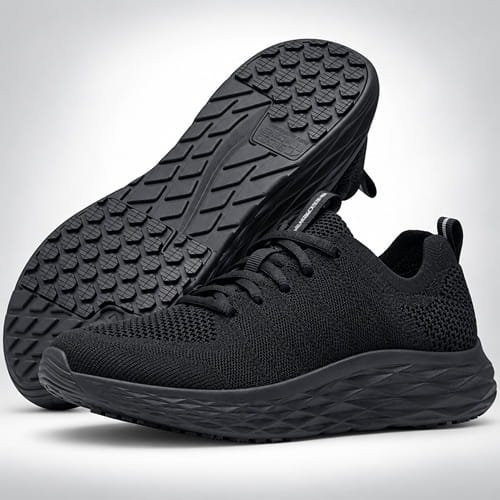
Best for: Servers, hosts, and food runners who want an athletic-style shoe designed for frequent movement.
Everlight combines lightweight cushioning, a water-resistant knit upper, and Shoes For Crews’ traction-oriented work outsole. It offers a practical place to start when mobility matters, although its upper is not the best match for every wet or hot-liquid task.
Key Details
- Outsole: Shoes For Crews TRACTIONiQ slip-resistant design and EASY CLEAN tread; its product description references ASTM F2913-19.
- Upper: Breathable, water-resistant knit construction.
- Closure: Lace-up sneaker design.
- Comfort: Lightweight construction and additional EVA foam.
- Fit: Confirm the exact men’s or women’s listing and available widths.
Things to Consider
Water resistance is not waterproof or hot-liquid protection. A knit upper may be less practical in heavy splashing areas.
Everlight stands out because it was built as a work sneaker, rather than being an ordinary running shoe described as comfortable for work. The brand specifically identifies a slip-resistant outsole and tread intended to make cleaning easier. Those are relevant qualities when a server moves repeatedly between dining areas and the kitchen threshold.
Its construction emphasizes a light feel. For employees covering considerable ground during a shift, this may be preferable to a heavier traditional work shoe. The upper also has some give, although the shoe must still hold the heel securely and leave enough room for the toes.
The main trade-off is protection from workplace liquids. A water-resistant knit upper can be pleasant during comparatively dry duties, but it is not an equivalent substitute for a more protective shoe in an area with repeated hot spills. The current manufacturer’s description refers to ASTM F2913-19; do not confuse that with a verified F3445 certification for every Everlight listing.
Bottom line: Choose Everlight for a light, mobile work-shoe design when its upper and fit match your job. Consider a less porous upper if splashes are part of your normal shift.
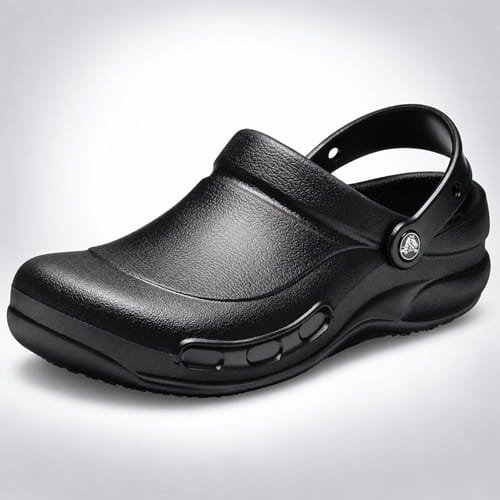
2. Crocs Bistro Work Clog: Best Affordable Easy-Clean Option
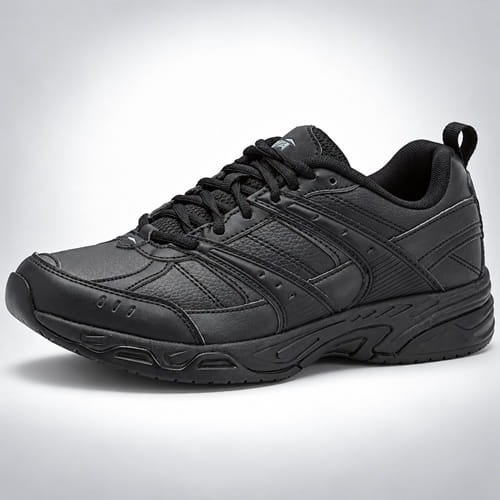
Best for: Prep employees and other workers who prioritize simple cleaning and a molded upper.
Bistro is an occupational clog, not a regular casual Crocs model. Its enclosed toe, washable construction, and Crocs Lock tread make it a useful alternative to fabric work sneakers, provided your employer allows this style.
Key Details
- Outsole: Crocs Lock slip-resistant tread.
- Testing: Crocs lists ASTM F2913-24 testing and ASTM F3445-24 certification.
- Upper: Fully molded and easy to wash with soap and water.
- Closure: Slip-on clog with a heel strap.
- Comfort: Contoured footbed and lightweight molded construction.
Things to Consider
Ventilation, heel security, and footbed feel differ from lace-up sneakers. Verify the employer’s policy on clogs.
Imagine cleaning up after a dinner rush. Water, spilled drinks, and food residue may end up on the outside of your shoes. With a mesh sneaker, cleanup can be awkward. Bistro’s molded upper is considerably simpler to wash, making maintenance a genuine reason to consider it.
The model also offers clearly stated occupational traction information. Crocs publishes both a test-method reference and an F3445 certification claim for the Bistro Work Clog, which is more specific than an unsupported promise that a sole is “non-slip.” That still does not guarantee traction on every combination of grease, floor finish, and cleaning product.
The main question is whether you like working in a clog. A heel strap may not feel as secure as laces during fast walking or stair use. Some workers appreciate the roomier feel and quick entry, while others prefer a closely adjusted shoe.
Bottom line: Bistro is compelling for buyers who value easy cleaning at a modest price. Make sure the occupational model, job requirements, and heel fit are right before committing to a full shift.
3. Skechers Work Nampa: Best Traditional Men’s Roomy Fit
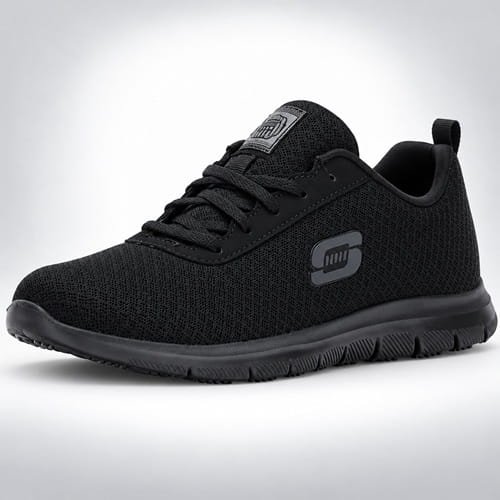
Best for: Men who need toe-room flexibility and prefer adjustable laces over a clog or slip-on.
The Nampa uses a smooth synthetic upper, Relaxed Fit forefoot, and cushioned insole. It is a conventional work-shoe option for buyers who want a relatively roomy shape without switching to an oversized length.
Key Details
- Outsole: Skechers describes an SRO-rated slip-resistant design for wet, dry, oily, and greasy surfaces.
- Upper: Smooth synthetic, faux-leather-style material.
- Closure: Lace-up front.
- Fit: Relaxed Fit toe and forefoot.
- Cushioning: Skechers Memory Foam insole.
Things to Consider
A roomy toe box does not excuse heel slippage. Memory Foam softness will not suit everybody.
One of the easiest mistakes in work-shoe shopping is buying a longer shoe to relieve pressure across the toes. That extra length may reduce pressure in one place while creating a loose heel elsewhere. Nampa’s Relaxed Fit construction is worth examining because it addresses forefoot room more directly.
The lace-up front allows some adjustment around the midfoot. Its synthetic upper is also a different proposition from Everlight’s knitted material: it may be simpler to wipe after small spills, although the shoe is not presented as fully waterproof.
Skechers describes an SRO-rated outsole and a cushioned Memory Foam insole. Treat that as manufacturer-reported information, not as proof we measured its grip or confirmed that it will feel comfortable to every worker. A person who prefers firmer cushioning may reach a different decision from somebody who wants a softer step.
Bottom line: Nampa is a useful men’s work-shoe candidate when a roomy forefoot, adjustable fit, and conventional appearance matter. Compare the actual width options and check the heel before choosing a size.
4. Skechers Work Ghenter-Bronaugh: Best Women’s Athletic-Style Option
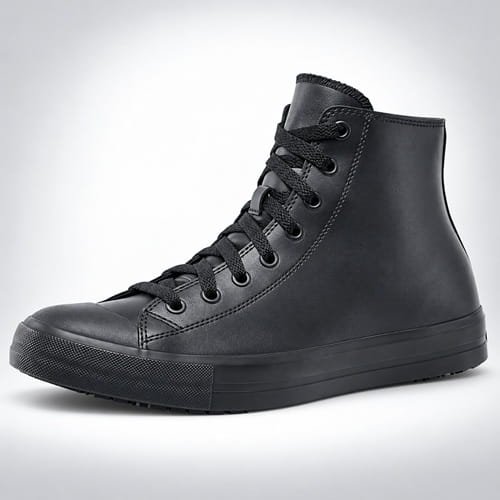
Best for: Women in front-of-house and other relatively dry service areas who want a breathable occupational sneaker.
Ghenter-Bronaugh combines an athletic-style mesh upper with a work-oriented outsole and a cushioned footbed. It offers a lighter-looking alternative to smooth leather or polyurethane clogs.
Key Details
- Outsole: Slip-resistant occupational design; check the exact regional style code.
- Upper: Mesh and synthetic materials.
- Closure: Lace-up fastening.
- Fit: Women’s sizing with Relaxed Fit construction on the referenced model.
- Cushioning: Air-Cooled Memory Foam on relevant Ghenter-Bronaugh listings.
Things to Consider
Mesh is not ideal for every hot-liquid or frequent-spill job. Regional certification language may differ.
For employees who spend a shift greeting guests or moving through a dining room, ventilation may be a priority. Ghenter-Bronaugh reflects that preference more closely than a sealed molded clog. Its upper construction makes the shoe more similar in feel and appearance to an athletic sneaker.
That advantage has limits. Mesh can allow more air movement, but it is not the same as a less porous work upper. A cook working beside a fryer should not select this model simply because the product name includes “Work.” Exposure conditions still come first.
Sizing needs equal care. Women’s footwear labels do not describe one universal foot shape, and Relaxed Fit does not guarantee a secure heel. Verify the precise model number, width, and outsole description shown by the US seller; do not transfer a European testing claim automatically to a different variant.
Bottom line: This model adds a worthwhile women’s-specific alternative for staff whose work environment and employer rules allow a breathable mesh upper. Fit and exact listing verification are the deciding checks.
5. Avia Avi-Union II: Best Wide and Extra-Wide Choice
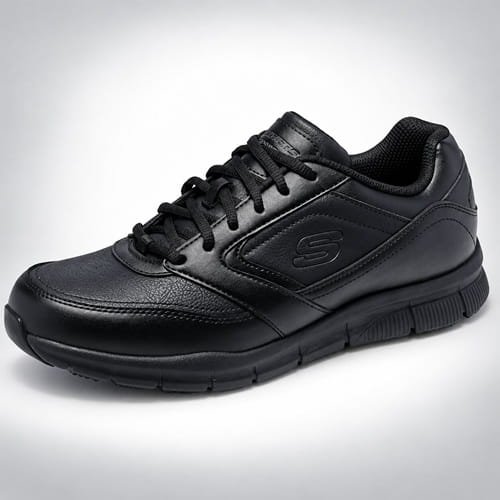
Best for: Men’s footwear shoppers who need width choices without automatically moving to a premium price bracket.
Avi-Union II offers medium, wide, and extra-wide variants, plus an oil- and slip-resistant tread described by Avia. Those sizing options make it distinctive within a list otherwise dominated by conventional work-shoe fits.
Key Details
- Outsole: Manufacturer-described oil- and slip-resistant rubber tread.
- Upper: Work-sneaker construction; confirm the exact color and variant.
- Closure: Lace-up front.
- Fit: Medium, wide, and extra-wide choices listed.
- Cushioning: EVA midsole with a removable memory-foam sock liner.
Things to Consider
Model-specific ASTM F3445 certification was not established. Some colors or widths may be unavailable.
A common buying-guide weakness is assuming standard-width shoes fit everyone. Avi-Union II is here because it gives shoppers several width choices rather than simply another fashionable work sneaker.
Avia describes a thick rubber outsole with a tread designed for oil and liquid exposure, along with a compression-molded EVA midsole and removable memory-foam sock liner. Its heel-cradle construction may appeal to buyers who want a familiar lace-up feel while evaluating cushioning and stability.
The available evidence is less specific on formal ASTM F3445 certification than it is for certain other models in this guide. We therefore treat the outsole description as a manufacturer’s product claim, not as an independently verified pass under a named performance standard.
The correct width is still only part of fit. Extra-wide footwear should not leave your heel moving loosely, and adding an insole should not crowd the toes or alter the fit unexpectedly.
Bottom line: Avi-Union II is a practical candidate when width selection is the priority. Check the exact size, seller, outsole information, and return policy rather than choosing it on width alone.
6. Shoes For Crews Pembroke Leather: Best Wipe-Clean Lace-Up
Best for: Workers seeking a more traditional leather work-shoe style with an adjustable lace-up fit.
Pembroke Leather combines a smoother leather upper, gusseted tongue, removable insole, and Shoes For Crews’ work-oriented tread. It makes sense for someone who dislikes mesh footwear or molded clogs.
Key Details
- Outsole: Shoes For Crews slip-resistant outsole with HYPERGRIP tread.
- Testing: The linked manufacturer description states ASTM F2913-19; confirm any newer claims against the exact version.
- Upper: Water-resistant leather.
- Closure: Lace-up fastening and gusseted tongue.
- Insole: Removable for cleaning or a compatible replacement.
Things to Consider
Leather may feel warmer and less airy than knit. Water resistance does not equal full liquid protection.
Pembroke offers a different answer to the same restaurant-work problem as Everlight. Where Everlight emphasizes a light sneaker-like construction, Pembroke takes a more traditional approach with leather and a more substantial-looking upper.
That distinction matters around everyday spills. A smooth upper can be easier to wipe after minor messes than a fabric surface with open knit or mesh. At the same time, a water-resistant treatment is not a promise of waterproof construction or protection against hot oil.
The gusseted tongue and adjustable laces contribute to a more enclosed fit than a simple slip-on. Its removable insole is another useful feature, but replacements must fit the actual shoe volume and should not create pressure.
For traction, the manufacturer lists its proprietary outsole and HYPERGRIP tread. Importantly, the product page we could verify references ASTM F2913-19, a test method, rather than supplying an F3445 certification for this exact listing. Avoid treating differently dated manufacturer descriptions as interchangeable.
Bottom line: Pembroke Leather is a strong comparison choice for workers who want a wipe-clean upper and traditional lace-up design. Compare its weight and ventilation with Everlight before deciding.
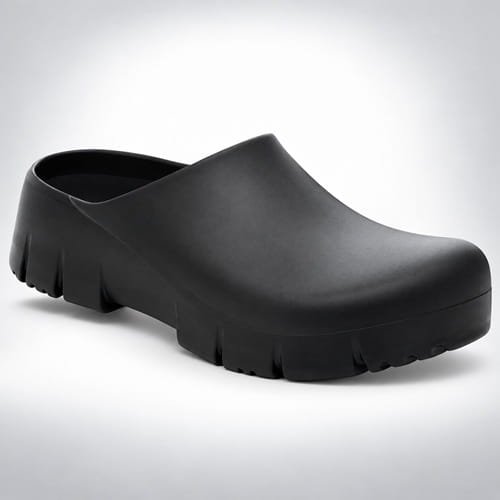
7. Birkenstock Super Birki 2.0: Best Structured Work Clog
Best for: Kitchen workers who prefer a washable polyurethane clog with a contoured removable footbed.
Super Birki 2.0 combines a waterproof molded upper with a cork-latex footbed and published occupational footwear ratings. It represents a notably different cushioning and fit experience from Crocs Bistro.
Key Details
- Outsole: Slip-resistant polyurethane construction.
- Certification: Manufacturer lists ASTM F3445-21 SR and EN ISO 20347:2022 information for Super Birki 2.0.
- Upper: Waterproof, dirt-resistant polyurethane.
- Closure: Slip-on clog.
- Footbed: Removable contoured cork-latex construction.
Things to Consider
An open-heel clog may conflict with some workplace rules. Verify the 2.0 model, European sizing, and heel security.
Some workers prefer a clog not because it is faster to put on, but because of how its footbed feels. Super Birki 2.0 is a meaningful alternative to Crocs Bistro for that reason. Its removable cork-latex footbed creates a more structured option than a typical one-piece molded shoe.
Birkenstock also publishes a specific ASTM F3445-21 SR designation for the 2.0 version. The exact model number matters: a similarly named older clog should not automatically inherit the same documented rating.
The polyurethane upper is designed to resist water and dirt and is straightforward to clean. Those are useful features for certain kitchen environments, but no clog is automatically suitable for every occupational hazard.
The trade-off is movement security. Somebody working mainly at a station may appreciate the quick-entry format, while a worker who rushes through corridors or uses stairs might prefer a securely fastened shoe. Check employer requirements before buying.
Bottom line: Super Birki 2.0 is worth comparing when structured footbed support, easy cleaning, and a specific published slip-resistance rating appeal to you. It is not inherently a better fit than Crocs Bistro.
8. HOKA Bondi SR: Best Premium Cushioning-Focused Option
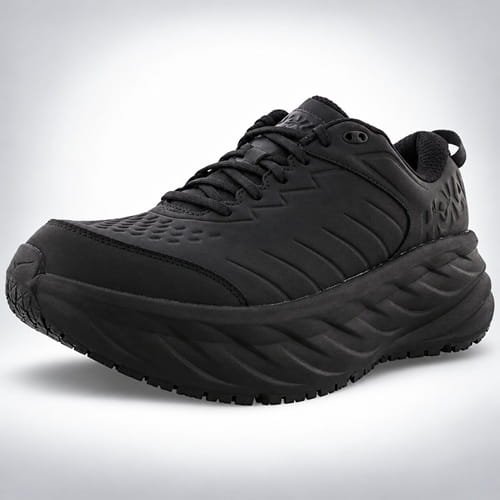
Best for: Workers who can justify a higher price and prefer substantial cushioning with a leather upper.
Bondi SR combines an EVA midsole, water-resistant leather, and a service-industry-oriented slip-resistant outsole. It is a premium alternative, not the automatic winner for every restaurant worker.
Key Details
- Outsole: HOKA-described slip-resistant rubber outsole.
- Upper: Water-resistant leather.
- Closure: Lace-up design.
- Midsole: EVA cushioning and full-ground-contact outsole construction.
- Fit: Separate men’s and women’s listings; check size and width availability.
Things to Consider
Significantly higher price and variable online availability. A model-specific ASTM F3445 certification was not independently confirmed.
The HOKA Bondi SR appeals to workers drawn to cushioned footwear but needing a model intended for professional use. HOKA describes the shoe as a service-industry adaptation with a water-resistant leather upper and a slip-resistant rubber outsole.
That matters because a normal Bondi running shoe is not equivalent to Bondi SR. An Amazon listing for a similarly named Bondi model may be cheaper or more readily available, but it should not be substituted without checking the exact shoe.
The thicker cushioning profile may suit people who enjoy a softer feeling underfoot. Yet more foam is not a universal solution to long shifts. The fit, ground feel, stability, and personal preference are all important, especially during turns and stops.
Price is the clearest drawback. Buyers can find occupational models with relevant traction features at far lower prices. Bondi SR is worth comparing only if its specific construction and cushioning appeal to you. We also have not confirmed an ASTM F3445 rating for this exact model, so none is claimed here.
Bottom line: Choose Bondi SR for its premium cushioning-and-leather combination, not because a higher price guarantees better grip. Check the exact SR model, seller, and return terms carefully.
What Matters Most in Restaurant Work Shoes?
Slip resistance comes first. Water, grease, oil, and cleaning products alter how shoes interact with a floor. Look for an occupational outsole and clear model-level information, not just a deep-looking tread pattern. A marked tread is not proof of laboratory performance. Our explanation of how rubber compounds, tread, and floor conditions affect grip explores the distinction in more detail.
The importance of appropriate footwear is backed by workplace research. A NIOSH study of a slip-resistant footwear program in food service found fewer slipping-related injury claims among workers provided with highly rated slip-resistant shoes. That group result should not be applied as a guaranteed benefit of any one model listed above.
Secure fit is next. Leave room for your toes without accepting excessive heel motion. Test shoes with normal work socks and, when practical, walk and turn on a clean dry surface before deciding whether the shape feels stable.
Upper materials affect practical use. Knit and mesh may feel airy; leather, smooth synthetics, and molded polyurethane can be easier to wipe. OSHA’s restaurant cooking safety guidance discusses workplace hazards, including slips and hot-liquid exposure. Select coverage and construction appropriate to the risks and your employer’s rules.
Comfort is more than softness. Cushioning, toe-box shape, midfoot security, and overall stability all matter. Extremely soft footwear is not automatically better for every person or task. Consider also how easily you can clean the outsole and whether replacement sizes will remain available.
Which Shoes Suit Different Restaurant Roles?
For servers and food runners, a secure, relatively lightweight sneaker is a useful starting point, especially when much of the shift involves walking between service areas. Everlight and Nampa are sensible models to compare when their upper materials meet the workplace rules.
For cooks and prep employees, food residue, water, grease, and hot-liquid exposure increase the importance of appropriate upper coverage and cleaning convenience. Crocs Bistro, Pembroke Leather, and Super Birki 2.0 offer distinct constructions, but the employer’s requirements should determine whether a particular clog or upper is acceptable.
For dishwashers, repeated wet conditions may make suitable water-resistant or waterproof uppers a stronger priority. Slip resistance is essential, but it does not replace controls such as prompt spill cleanup and appropriate floor maintenance.
For bartenders, long standing periods and wet flooring can make fit and traction especially relevant. An attractive sneaker-style shoe is worthwhile only if it provides suitable work footwear characteristics. For a fuller selection checklist, see the practical features to compare before choosing restaurant shoes.
How Much Should You Spend on Restaurant Work Shoes?
A practical place to begin is roughly $45 to $90, where several occupational models can be compared. This is a shopping suggestion, not a claim that every restaurant employee has the same budget. Prices vary by seller, size, discount, and season.
A premium shoe can make sense if the fit, cushioning, materials, or width choices offer something meaningful for you. But higher cost does not establish better traction. Compare the documented features and return terms instead of treating price as a quality score.
Also check whether your employer has an approved shoe list or offers a footwear allowance. If you are between sizes or considering a clog for the first time, an easy return process is particularly valuable. The least expensive pair is not necessarily the best value if it fits badly or wears out early.

Frequently Asked Questions
What are the best non-slip shoes for restaurant workers?
Shoes For Crews Everlight is our overall lightweight starting point, while Crocs Bistro is an easy-clean occupational clog. Skechers Nampa and Pembroke Leather are worth comparing if you prefer laces and a more conventional work-shoe fit. None is universally best; workplace hazards and individual fit determine suitability.
What shoes do restaurant workers usually wear?
Common choices include slip-resistant work sneakers, lace-up occupational shoes, and purpose-built work clogs. Servers may prioritize secure fit during frequent walking, while some kitchen workers value easy-clean uppers. Employer policies and the actual floor conditions matter more than whether the shoe looks like a sneaker or clog.
Are slip-resistant shoes required for restaurant workers?
Many employers require them, but requirements depend on the workplace, hazards, and applicable rules. There is no single universal US restaurant shoe model. Follow your employer’s dress and footwear policies and choose shoes appropriate to the work being performed.
What are the most comfortable shoes for long restaurant shifts?
Comfort depends on foot shape, cushioning preference, stability, and fit. HOKA Bondi SR has a cushioning-focused design, while Everlight and several Skechers Work models take different approaches. Try the correct size, check toe room and heel security, and do not assume that the softest midsole will work best.
Are Crocs Bistro shoes good for restaurant kitchens?
Crocs Bistro offers a washable enclosed-toe construction and manufacturer-published slip-resistance testing information. It may suit some kitchen tasks, but the heel-strap arrangement and clog style are not right for every worker or employer policy. Check fit, coverage, and work requirements before buying.
What are good men’s slip-resistant shoes for restaurant work?
Skechers Work Nampa is a candidate for a roomier forefoot, Avia Avi-Union II stands out for width options, and Shoes For Crews Pembroke Leather offers a smoother leather upper. Compare the exact model’s published outsole information and the available sizes before choosing.
How much should restaurant workers spend on work shoes?
Around $45 to $90 is a reasonable starting range for comparing multiple occupational designs. More expensive shoes may offer particular materials or cushioning features, but price alone does not prove safety or comfort. Factor in fit, durability, employer requirements, and the retailer’s return policy.
How often should restaurant workers replace their shoes?
There is no fixed replacement interval for every worker. Inspect tread wear, embedded grease or debris, sole separation, damaged uppers, and changes in fit or support. Replace footwear when its condition makes it unsuitable for the work, rather than relying only on a number of months.
Final Verdict: Which Restaurant Work Shoes Should You Buy?
The best shoes for restaurant workers are the pairs that match the floor conditions, your job, and your feet. For a lightweight work-sneaker starting point, we favor Shoes For Crews Everlight. If easy cleaning matters most, Crocs Bistro deserves a close look. Buyers who prefer a smooth leather upper can compare Pembroke Leather, while Super Birki 2.0 offers a distinctive contoured-footbed clog alternative.
For extra-wide choices, consider Avia Avi-Union II. HOKA Bondi SR is the premium cushioning-oriented option, but its higher price should be justified by the benefits you actually need.
Before ordering, verify your employer’s footwear requirements, confirm the exact model and size, and check current seller information. Compare the available Everlight options on Amazon, or start with the work-shoe category above that best matches your shift.
Good restaurant footwear is not about choosing the most famous brand. It is about buying the right combination of grip, fit, materials, and value for the work you do.