Disclosure: Shoe Clarity is reader-supported. As an Amazon Associate, we earn from qualifying purchases. We may also earn commissions from other affiliate programs, at no additional cost to you. Learn more →
How do you make shoes non-slip? Start by cleaning the outsoles and checking whether the tread is worn. Some shoe-compatible grip products or professional repairs may help in limited situations, but the result depends on the sole, the floor, and the substance underfoot. No household trick can reliably turn ordinary sneakers into tested slip-resistant work shoes.
A smooth dress shoe on dry flooring presents a different problem from sneakers worn around restaurant grease and spills. Before reaching for a spray, figure out why the shoe is slipping and where you plan to wear it.
Can You Really Make Regular Shoes Non-Slip?
You may be able to improve grip in a particular situation. You cannot assume a change will work on every surface or make footwear suitable for a job that requires slip-resistant shoes.
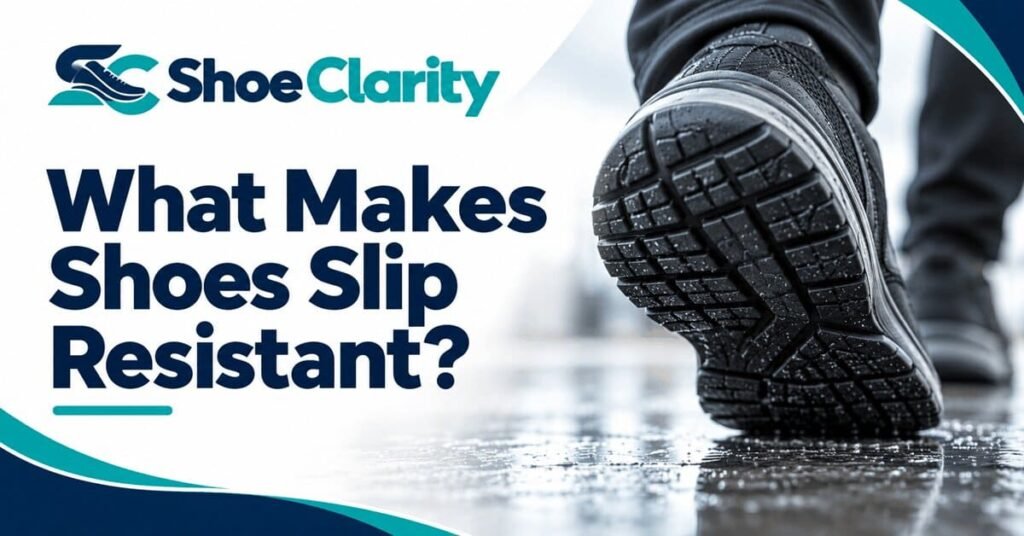
Outsole compound and tread design influence traction, as do water, grease, cleaning residue, dust, and floor texture. Even footwear sold as slip-resistant is not slip-proof.
The UK’s Health and Safety Executive advises choosing footwear around the actual flooring and contaminants present at work. A sole that performs well in water may not perform equally well around oil or sticky food waste. That’s why a home treatment that feels grippier on one surface cannot establish reliable performance in a commercial kitchen.
A practical four-step approach:
- Identify the surface. Dry indoor flooring, wet tile, and grease-covered kitchen floors present different traction problems.
- Inspect and clean. Remove debris using the shoe maker’s instructions. Check for flattened tread, sole separation, or damage once the shoe is dry.
- Match the option to the setting. On ordinary low-risk, dry floors, a manufacturer-compatible grip accessory may be worth considering. Read its limitations and inspect it for peeling. For workplace floors, check the shoe policy and ask about suitable footwear or approved overshoes.
- Replace rather than improvise when needed. Worn tread, damaged footwear, or a sole that does not suit the job calls for a different solution, not another layer of tape or spray.
Why Are Some Shoe Soles Slippery?
Smooth or Unsuitable Outsole Materials
A polished leather sole, a hard smooth bottom, and a purpose-designed work outsole do not interact with flooring in the same way. Material choice matters, but a soft feel alone does not prove better traction. A product’s look or a rough-looking pattern cannot tell you how it will perform on contaminated tile.
Think about a pair of everyday sneakers. They may feel stable on dry pavement, yet offer disappointing grip near a restaurant dish station. Their outsole was not necessarily designed or evaluated for that combination of floor and contaminant. New shoes can have this problem too: a sole that looks unworn is not automatically appropriate for every floor, and waiting for it to “break in” is no substitute for checking its intended use. For a closer explanation of these differences, see how outsole materials and tread design affect traction.
Dirt, Grease, and Debris in the Tread
Grooves cannot do much when compacted dirt or food residue fills them. Grease may also leave a film on the sole. In that case, cleaning can restore contact with the floor that debris was interfering with. It does not create new tread or change the original outsole compound.
It is easy to mistake packed grooves for worn tread. Clean the shoe as directed, let it dry, and inspect again.
Worn Tread or a Poor Floor Match
As tread flattens, traction characteristics can change. The HSE specifically warns that outsole wear and clogged grooves affect slip resistance. A visibly smooth heel, separated sole, or deeply uneven wear deserves more attention than a temporary slippery feeling caused by dirt.
Also look beyond the shoe. A greasy floor stays hazardous even if you buy better footwear. Floor cleaning, spill response, mats, and drainage remain part of the solution.
How to Make Shoes Less Slippery: What Can Help
There isn’t one universally reliable hack. The following options have different purposes, costs, and limitations. Start with the least invasive step and stop if a change would conflict with the shoe manufacturer’s instructions or your employer’s policy.
1. Clean the Outsoles and Remove Trapped Debris
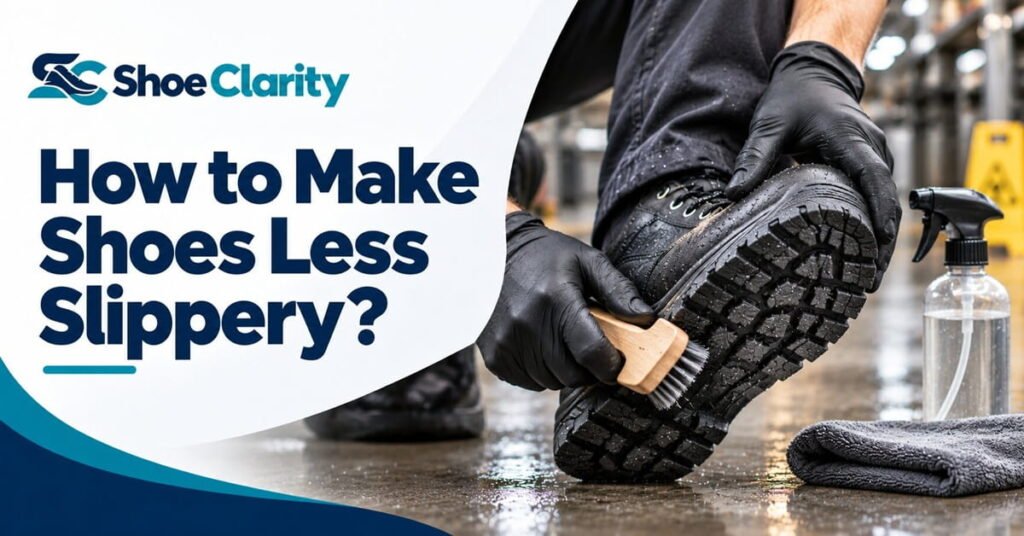
When the sole is dirty rather than damaged, follow the maker’s cleaning instructions. Brush loose grit from the tread grooves, especially around the heel and forefoot. If the material allows, wipe away residue with a slightly damp cloth and a mild shoe-safe cleaner. Avoid soaking materials that need to stay dry.
Let the shoes dry as directed, then inspect the grooves again. Avoid harsh solvents, unknown degreasers, or mixed cleaning chemicals. They may damage outsole materials or leave a slippery residue.
Here’s the surprising part: the safest way to get better contact sometimes involves removing something, not adding something. But if the tread has worn flat, cleaning alone cannot bring it back.
2. Consider Shoe-Compatible Grip Pads
Adhesive grip pads are often sold for smooth-bottomed dress shoes. They may change how a shoe contacts a particular dry surface, but performance depends on the pad material, adhesive bond, fit, and conditions. A pad that peels or shifts can introduce its own problem.
For ordinary dress shoes on low-risk, dry indoor flooring, first confirm that the pad is compatible with the outsole and intended use. Follow the maker’s cleaning, placement, and adhesive-setting instructions, then check that it stays firmly attached before each wear. Stop using it if an edge lifts or the pad shifts. Don’t cover existing tread, modify protective footwear, or assume a fashion-shoe pad suits grease-covered restaurant floors. At work, follow your employer’s footwear policy.
3. Understand What Traction Sprays Can and Cannot Do
Some retail products claim to add surface grip. Those claims vary, and a spray that changes the feel of a sole has not automatically demonstrated dependable traction under water, grease, heat, or repeated abrasion. Application may affect the shoe’s finish or warranty.
Before considering a spray for casual use, check whether its manufacturer identifies compatible outsole materials, application limits, drying time, and the surfaces for which it is intended. Don’t apply an unknown coating to work footwear or treat a consumer spray as a workplace safety solution.
4. Ask a Cobbler Whether the Outsole Can Be Repaired
A professional shoe repair shop may be able to replace or add a suitable sole to some footwear. Construction matters: not every sneaker, clog, or molded work shoe can be resoled. Ask what material will be used, which surfaces it is intended for, and whether the repair affects fit or stability.
A repair can change a work shoe’s original tested configuration. Confirm with the manufacturer and employer before assuming its performance claims still apply.
5. Check Purpose-Designed Slip-Resistant Overshoes
Overshoes are a different approach: they fit over existing footwear rather than changing its sole permanently. In its restaurant clean-up guidance, OSHA discusses slip-resistant overshoes for wet or greasy tasks when available.
Not every cover is suitable. Check its intended surfaces, fit, fastening method, and workplace approval. For repeated exposure, proper work shoes may be simpler.
DIY Non-Slip Shoe Hacks That May Not Hold Up
Online hacks may change traction briefly, but they rarely come with dependable evidence for workplace floors.
Hairspray, Salt, and Glue
Hairspray may feel tacky at first but can wear off, attract dirt, or change with moisture. Salt mixed with glue creates an improvised surface whose bond and wear behavior are unknown. Neither treatment establishes that a shoe will grip oily tile or withstand repeated cleaning. Skip them for work footwear.
Tape and Homemade Coatings
Tape can peel, trap moisture, or wear unevenly. A coating that seems helpful on dry flooring may behave differently when wet. A few grippy steps do not establish dependable performance.
Sanding, Cutting, or Scoring Soles
Scuffing a smooth outsole may change its surface, but cutting deep grooves or sanding without manufacturer guidance can remove material, weaken the sole, alter the contact pattern, or damage a shoe that was designed to perform as a complete product.
ASTM F3445-24 addresses slip-resistance performance requirements for completed footwear evaluated with the ASTM F2913 whole-shoe tester. The standard does not certify a home-modified sneaker just because the bottom looks rougher. In fact, its scope cautions that controlled test results do not establish performance in every real-world situation.
If a shoe needs substantial alteration to feel usable, a different pair may be the more practical answer.
How to Make Shoes Non-Slip for Restaurant Work
Restaurant work raises the stakes because floors change throughout a shift. A prep station may have water and food residue, while a cooking area may have oil, and the route to the dining room may use a different floor finish. Your shoes need to match the hazards you actually encounter.
Imagine a server who spends most of the shift on dry dining-room flooring but regularly crosses a wet dishwashing area. Sticking an adhesive pad onto ordinary sneakers doesn’t establish that they are suitable for that route. A better approach is to check the workplace footwear policy and choose an outsole intended for the relevant conditions.
OSHA’s restaurant food-preparation guidance recommends appropriate waterproof, non-slip footwear and prompt cleanup of food spills. It also emphasizes employers’ responsibility for safer working conditions. The goal is not to make the worker responsible for solving a dangerous floor with a can of spray.
Evidence supports choosing footwear carefully. In a randomized trial involving roughly 17,000 school food-service workers, districts provided with highly rated slip-resistant shoes saw a 67% reduction in slipping-related workers’ compensation injury claims. That result concerns a specific footwear program, not DIY coatings, homemade treatments, or every product labeled “non-slip.”
For restaurant shifts, check three things before buying or modifying anything: your employer’s requirements, the floor and contaminants involved, and whether the exact footwear model has relevant manufacturer information. If you are comparing designs across roles, consider which footwear features matter for different restaurant duties.
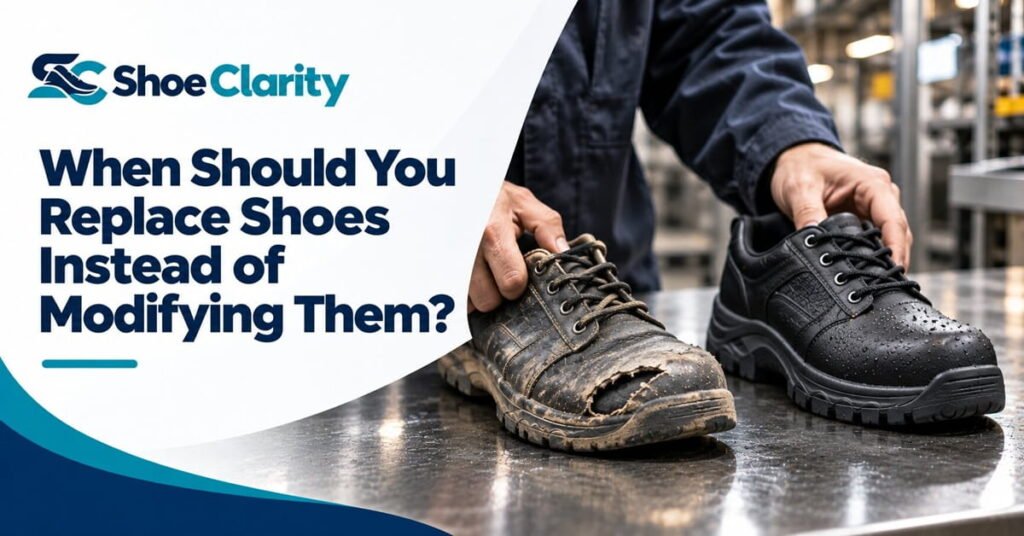
When Should You Replace Shoes Instead of Modifying Them?
Sometimes the right next step is cleaning; other times, it is replacing the shoe. If the original tread has worn away or the sole has separated, adding a coating cannot restore the shoe’s tested configuration. Use this quick guide to distinguish a maintenance problem from an unsuitable or worn-out shoe.
| What you find | Better next step |
| Debris filling otherwise intact grooves | Clean using the manufacturer’s instructions, then inspect again. |
| Smooth sole not intended for the job | Choose suitable work footwear rather than relying on a DIY treatment. |
| Grip pad or overlay loosening | Stop using the accessory; review manufacturer guidance and workplace rules. |
| Severe tread wear, sole separation, or damage | Replace the shoes or obtain an authorized professional assessment. |
| Employer requires particular footwear | Follow that policy and check approved models or overshoes. |
Look at the heels as well as the forefoot. Repeated pivoting and walking can wear them differently, especially when you work long shifts. If you’re unsure whether a pair has reached the end of its useful life, checking wear signs rather than the calendar alone is a useful next step.
New shoes won’t fix persistent spills or poorly maintained floors. Those need separate controls.
How to Check Your Shoes Without Taking Unnecessary Risks
You can assess obvious wear without testing whether you can slide on a wet or greasy floor. Never create a slick patch to test a DIY treatment or walk deliberately across a known slip hazard.
- Look under each shoe. Check for trapped debris, flattened tread, cracking, loose material, and uneven heel wear.
- Check construction. Inspect the bond between upper and sole, the heel area, and any attached traction accessory.
- Read the product guidance. Check whether the maker allows the cleaning product, repair, or add-on you are considering.
- Consider the work setting. Ask whether your workplace requires specific footwear or allows covers and modifications.
- Choose the next action. Clean an intact dirty sole, seek advice for a repairable issue, or replace footwear that is unsuitable or worn out.
A visual check helps you spot wear, but it cannot measure slip resistance. Don’t test a modification by deliberately walking on a slippery surface. If the work conditions are uncertain, ask your employer or footwear supplier which products suit the floor and contaminants.

Frequently Asked Questions
Can you make any pair of shoes non-slip?
No. Cleaning may improve contact when an outsole is clogged, and compatible accessories may help in limited settings. But there is no universal treatment that makes every shoe reliably slip-resistant. Sole materials, tread, wear, flooring, and contaminants all matter. Footwear required for a workplace should meet that workplace’s requirements.
Do non-slip shoe pads work on wet floors?
Some pads are marketed for added traction, but you should not assume they work on wet or greasy floors. Check the exact product’s claims, material compatibility, and limitations. A fashion-shoe grip pad is not equivalent to footwear evaluated for occupational slip resistance, and peeling adhesive creates another concern.
Can hairspray make shoes less slippery?
Hairspray can leave a temporary tacky layer, but its effect is inconsistent and may change with moisture, dust, and wear. It is not a dependable method for restaurant or other safety-sensitive work. Cleaning the sole or selecting footwear suited to the floor is a more sensible approach.
Will sanding shoe soles improve traction?
Sanding might change the feel of a smooth sole, but that does not establish safer grip. It may remove material, change the tread’s contact pattern, or damage the shoe. Avoid sanding work footwear unless the manufacturer specifically permits the treatment, and do not assume any modified sole retains its original performance claims.
Can regular sneakers be made safe for restaurant work?
Not simply by adding tape, spray, glue, or grooves. Restaurants may require footwear appropriate for wet or greasy floors, and individual employers can set shoe policies. Choose an approved design that fits securely, or ask whether a purpose-designed overshoe is acceptable for the task. Cleaning spills and maintaining floors still matter.
The Bottom Line: Better Grip Starts With the Right Footwear
If you’re trying to make shoes less slippery, begin with a simple inspection. Clean debris from an intact sole, check for damage, and consider whether the shoe was intended for the floor in question. Grip accessories and professional repairs have limited, product-specific uses. They are not a guarantee of safe traction, particularly around water, grease, or repeated workplace exposure.
For restaurant shifts, the sounder choice is footwear suited to the job, paired with prompt spill cleanup and proper floor maintenance. If your current sneakers aren’t a good match, compare work-shoe options for different restaurant shifts before choosing a replacement. Look at the actual outsole information, fit, care requirements, and employer rules, not just a “non-slip” label.